Student Colloquium 2025 Round-up
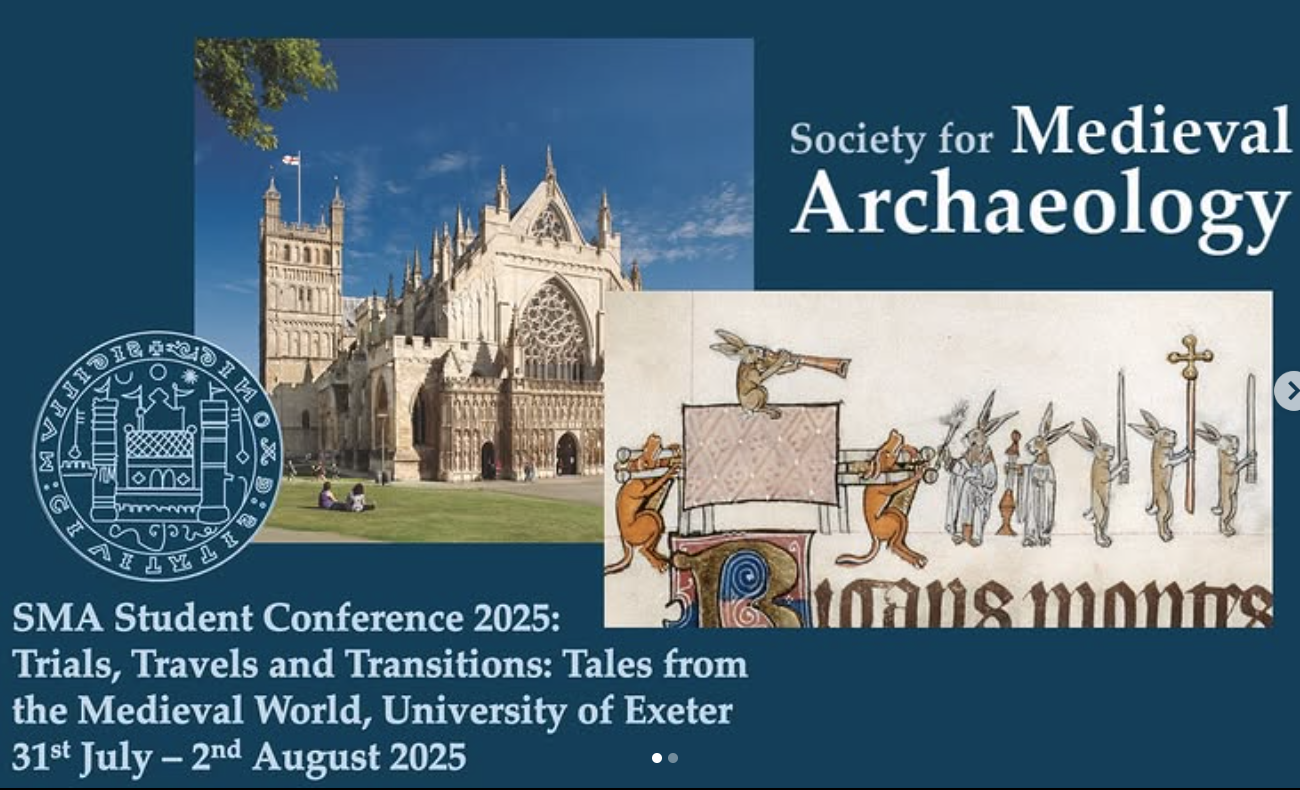 This year’s student colloquium, ‘Trials, Travels, and Transitions: Tales from the Medieval World’ was held between 30th July – 2nd August 2025. The four-day hybrid event was hosted at the University of Exeter’s, Digital Humanities Lab, led by this year’s student representative Hannah Britton, and supported by an Exeter based organising committee consisting of Laura Burnett, Jessica Peto, Simran Kaur, Jack Sudds, and Hayley Haynes. The conference brought together eighteen speakers, from across fourteen institutions based in eight different countries, including India, Ireland, Norway, Spain and the UK. This year saw a variety of methods and specialisms including, but not limited to, soundscapes, material culture, landscapes, GIS, heritage conservation, conflict archaeology, zooarchaeology and bioarchaeology.
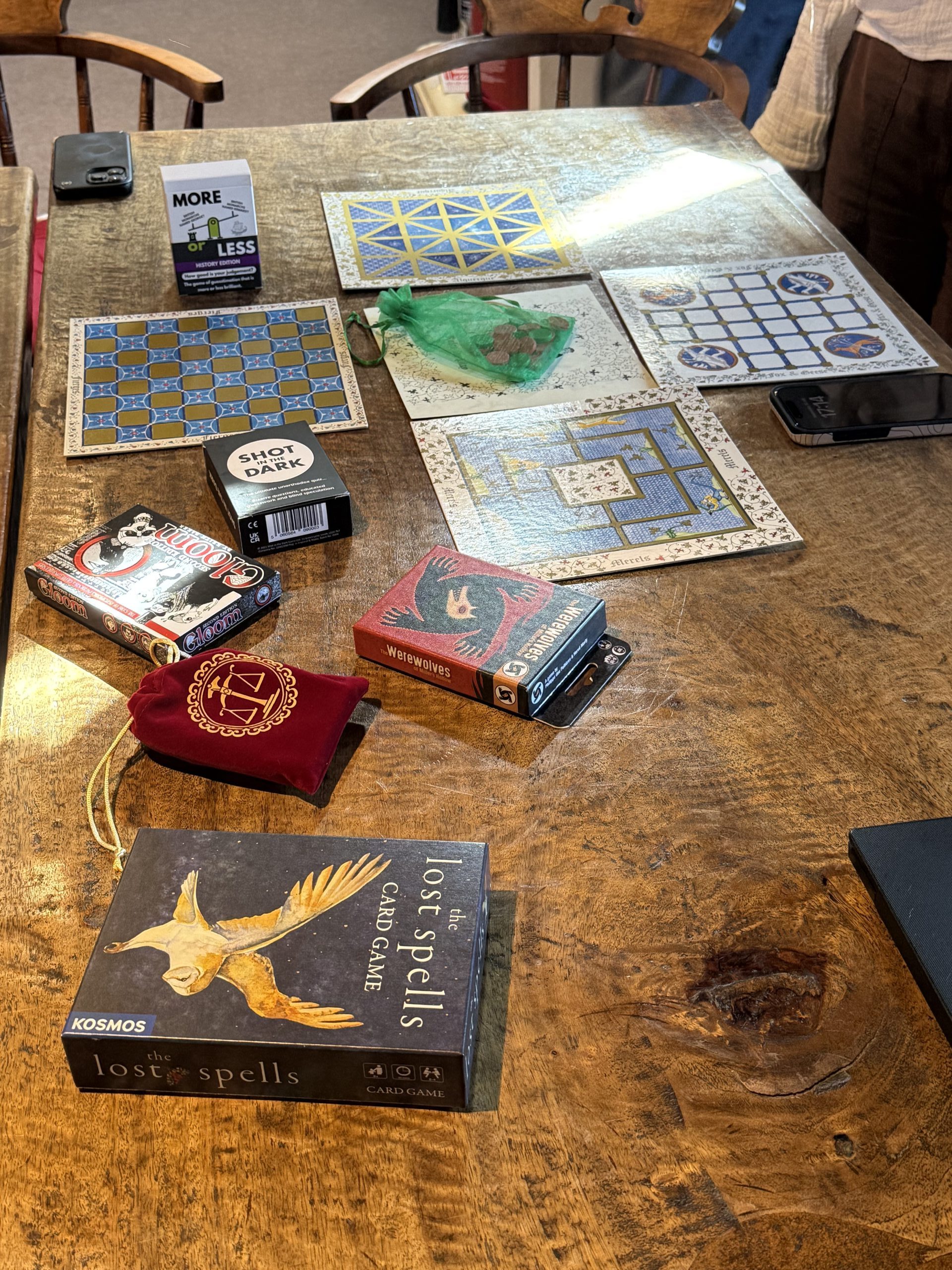 The event kicked off with a pre-conference icebreaker activity at the scenic St. Nicholas Priory, one of the oldest buildings in Exeter, founded in 1087. The immersive Medieval boardgame evening introduced everyone to the conference through this year’s theme of storytelling.
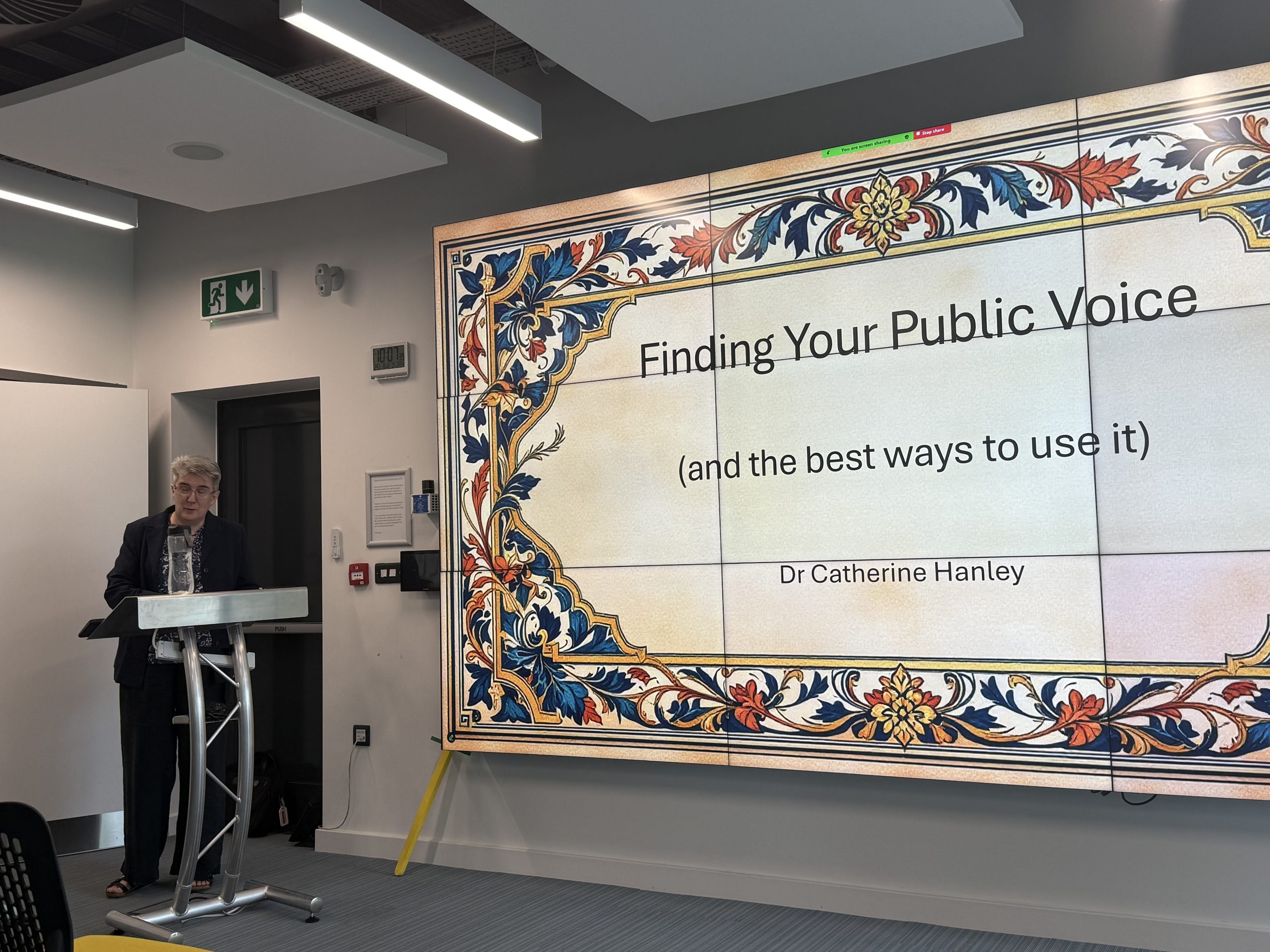
Day 1 of the conference was opened by this year’s keynote and Q&A session with Dr. Catherine Hanley, a Historian and author to an impressive collection of non-fiction trade books. Her talk ‘Finding your public voice’ discussed public engagement and offered insight into how to reach wider audiences with our research. The conference talks kicked off with Session 1 – ‘Identity’, where we travelled from the medieval Islamic Horn of Africa to seventh century Anglo-Saxon barrows and burial practices with Mario Llorente García, Wyatt Wilcox, and Hayley Haynes. Session 2 – ‘Elites and Non-Elites’, took us on a journey from examining the construction and function of Early Medieval Irish Crannógs, to exploring cultural identity during the English Norman Conquest through dietary practices and the sport of falconry with talks by Étienne Arsenault, Siddhant Sarkar and Hannah Britton. Session 3 – ‘Retaining and Sharing Heritage’ saw Silas Ploner, Simran Kaur, and Haidy Abdullah taking us on a journey exploring craft technique from cathedral building in Northern Europe, to funerary architecture during the Mughal period in India, to the re-analysis of the major historical site of Tell Abu Mandour, exploring themes of experimental approaches, site protection and shared heritage.
Day 2 kicked off with Session 4 – ‘Conflict’ where Jessica Nutt, Mairéad Finnegan, transported us from the Viking conflict of Early Medieval Wales, to Ireland, where the expression of Irish identify was explored through the mantle dress of Ireland. We were then transported to central India, by recently awarded PhD, Dr. Shriya Gautam with the Medieval Rock Art of central India, often exploring themes of war, and brought back to the English countryside with turbulent conflict and management of deer in the English countryside by Jack Sudds. Session 5 – ‘Sound/Performance’, brought us an immersive exploration of a Byzantium Church through soundscapes by Charlie Kate Mason, and Laura Burnett took us on a journey in the identification of a bell type linked with the medieval English religious practice. The final Session 6 – ‘Geospatial’, took us on a journey of the medieval landscapes of the Indian subcontinent, beginning with Diptarka Datta’s analysis of Delhi, India using GIS techniques, to Bhavya Srivastava exploring medieval landscapes through re-analysis of the scholar traveller, Al – Biruni. The conference finished with a talk from Muhammad Aslam TC exploring medieval urbanism in the Deccan.
Following the talks, a creative session was led by Exeter’s Laura Burnett where we explored public engagement, finding our stories within our research and how to move beyond academic jargon, with fun activities including ‘Collage your PhD’ and ‘Build your PhD out of Lego’. Finally, as the conference came to a close, Jessica Nutt from the University of Edinburgh was awarded best student presentation for her talk, titled ‘Sagas and Swords: Early Medieval Wales and Evidence of Viking Conflict’. The Colloquium concluded with a post-conference tour of Exeter Cathedral, examining some of the behind-the-scenes of iconography and stoneworking. Before finishing up at the Royal Albert Memorial Museum, where we explored some of the local archaeology of Exeter and Devon on display.
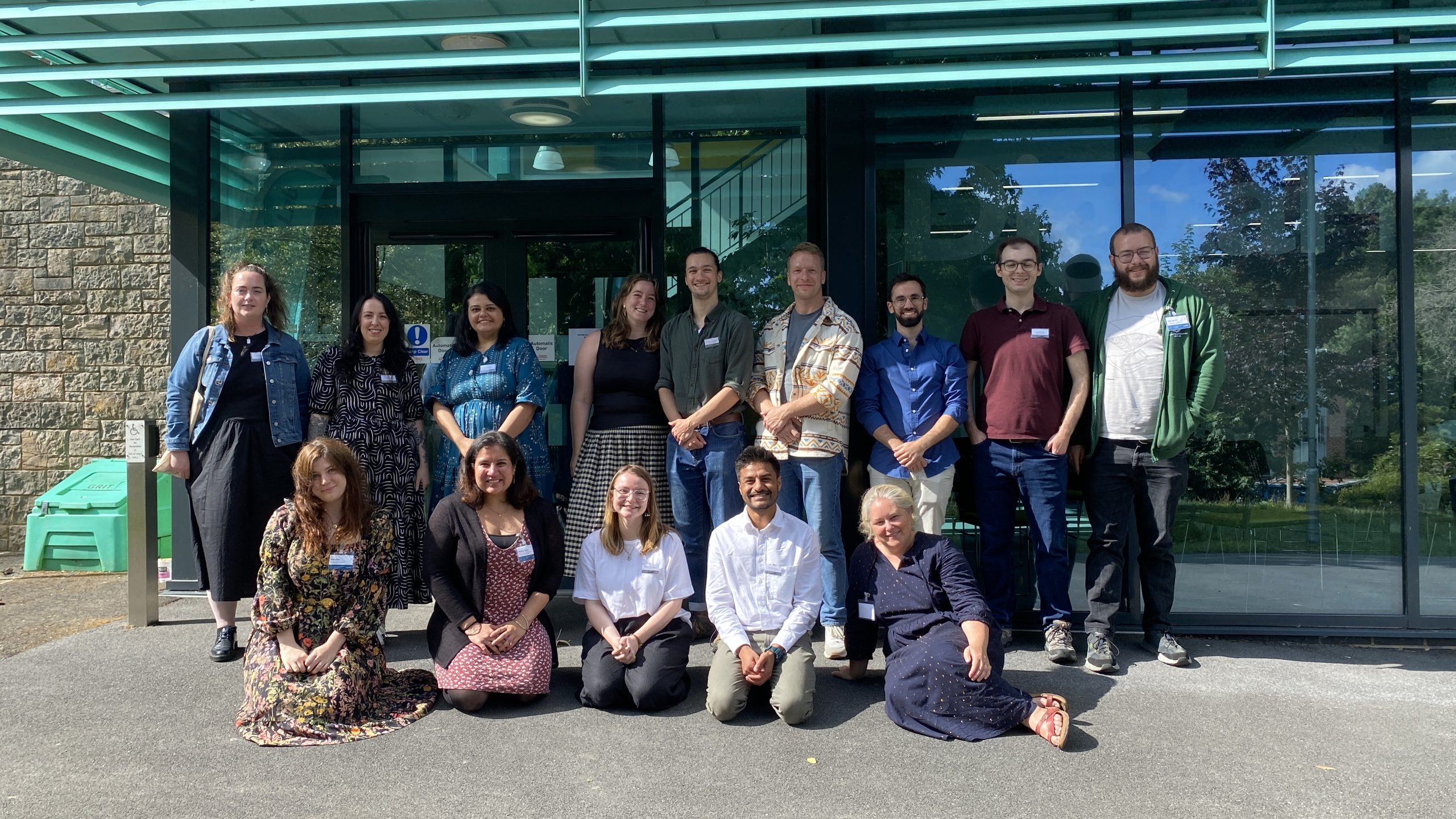
We’d like to extend our thanks to all our speakers and attendees on making the Colloquium such a success!
Hannah Britton, SMA Student Representative 2025
Latest News
2026 Jarrow Lecture – Bede, Providence, and Early Medieval Kingship
Announcing this year’s Jarrow Lecture: Bede, Providence, and Early Medieval Kingship This year’s lecture will be delivered by Dr Tom Pickles, Associate Professor of Early Medieval History at the University of Chester. It will take place on Friday 22nd May 2026 at 7:30pm at St. Paul’s Church, Jarrow (NE32 3DZ). Free entry and refreshments provided.
Wiltshire Pottery Type Series – Available Now!
Type series of medieval and post-medieval pottery for Wiltshire (c. 400–1700) The type series consists of sample sherds of pottery found (but not necessarily made) within the county, and an accompanying database with descriptions of wares and fabrics. It includes, for example, Saxon handmade wares, medieval Laverstock wares from the Salisbury area and post-medieval slip-decorated