SMA Conference 2026 Round-up
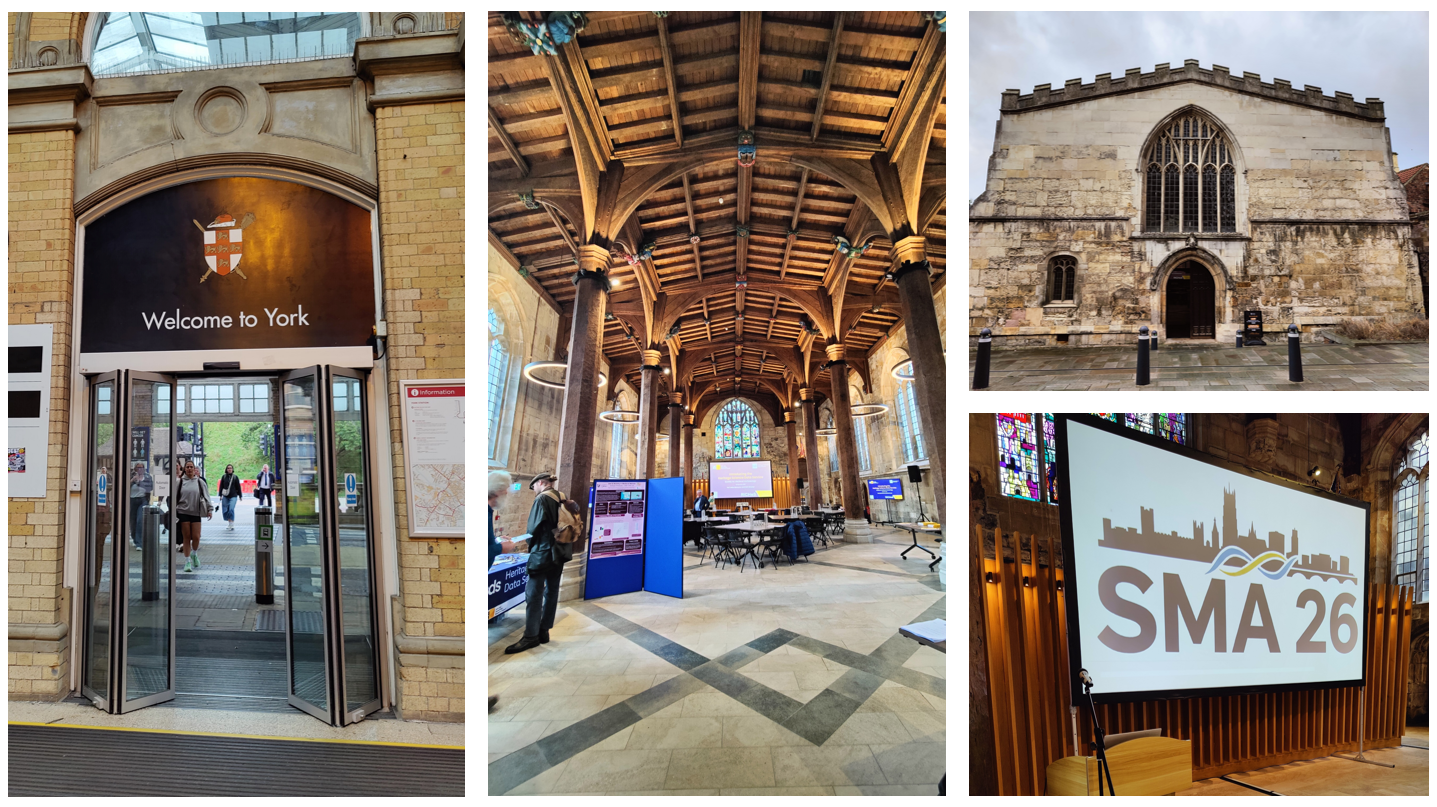
The SMA Conference 2026 took place on the 19th September in the historic surroundings of the Guildhall in York. We welcomed members and friends for a day themed around Heritage Science – a broad church, in the words of our keynote speaker, superbly demonstrated by the wide-ranging and varied programme of talks.
The day kicked off with a fine welcome from our hosts Kenneth Clarke, Director of the Centre for Medieval Studies, and Duncan Petrie, Dean of Arts and Humanities at the University of York. Then it was time to dive straight into Session One, which was all about data and dating.
Julian D. Richards (University of York and the Archaeological Data Service) introduced us to the Heritage Science Data Service (HSDS), a core component of the RICHeS programme. At its heart is a trusted digital repository with data added by a range of core partners, alongside a suite of software tools to enable researchers to visualise and analyse the data. From digital provision of reference collections to online collaborative tools to visualise medieval landscapes, the potential for innovation in medieval archaeological research is huge.
Next, Emma Brownlee (Historic England) talked about her work at the Great Ryburgh cemetery and how the application of ‘wiggle-matching’ has enabled more precise radiocarbon chronologies to be constructed. Instead of the variable precision of a single radiocarbon date, ‘wiggle-matching’ multiple dates from different skeletal elements allows dating of individuals to a generation.
Then, we pivoted from people to buildings as Aleks McClain (University of York) reviewed the findings of a project to apply a novel radiocarbon dating technique to lime mortar from six early medieval churches in Yorkshire. Given that stone buildings are one of the most common standing and excavated resources from the medieval period, a reliable mortar dating method has significant research potential and the results from this project are very promising.
A quick break offered the chance to mingle and mull over the first three talks, as well as time to browse the fascinating posters on display. Like the talks, these covered a range of topics from Vitamin D deficiency in early medieval England to mapping Viking movements in Wales.
In Session Two, the focus shifted to materials and some of the new techniques being applied to objects and buildings. Gareth Perry (University of York) spoke about the enigmatic Stafford Ware pottery and how archaeometric analysis has resolved a long-debated question of how it was made. This research has shown the existence of two groups of potters on the same street making visually similar pottery but by different methods. This is not only fascinating but has wider implications for our understanding of technological development and the impact of culture change.
Sticking with pottery, Yannick Signer (University of York) also spoke about archaeometric analysis of pottery as applied to archival material from 11th-15th century pottery production sites in Yorkshire. A range of new insights into how production steps were performed was revealed, which in turn has added nuance to our understanding of how production changed across time and space.
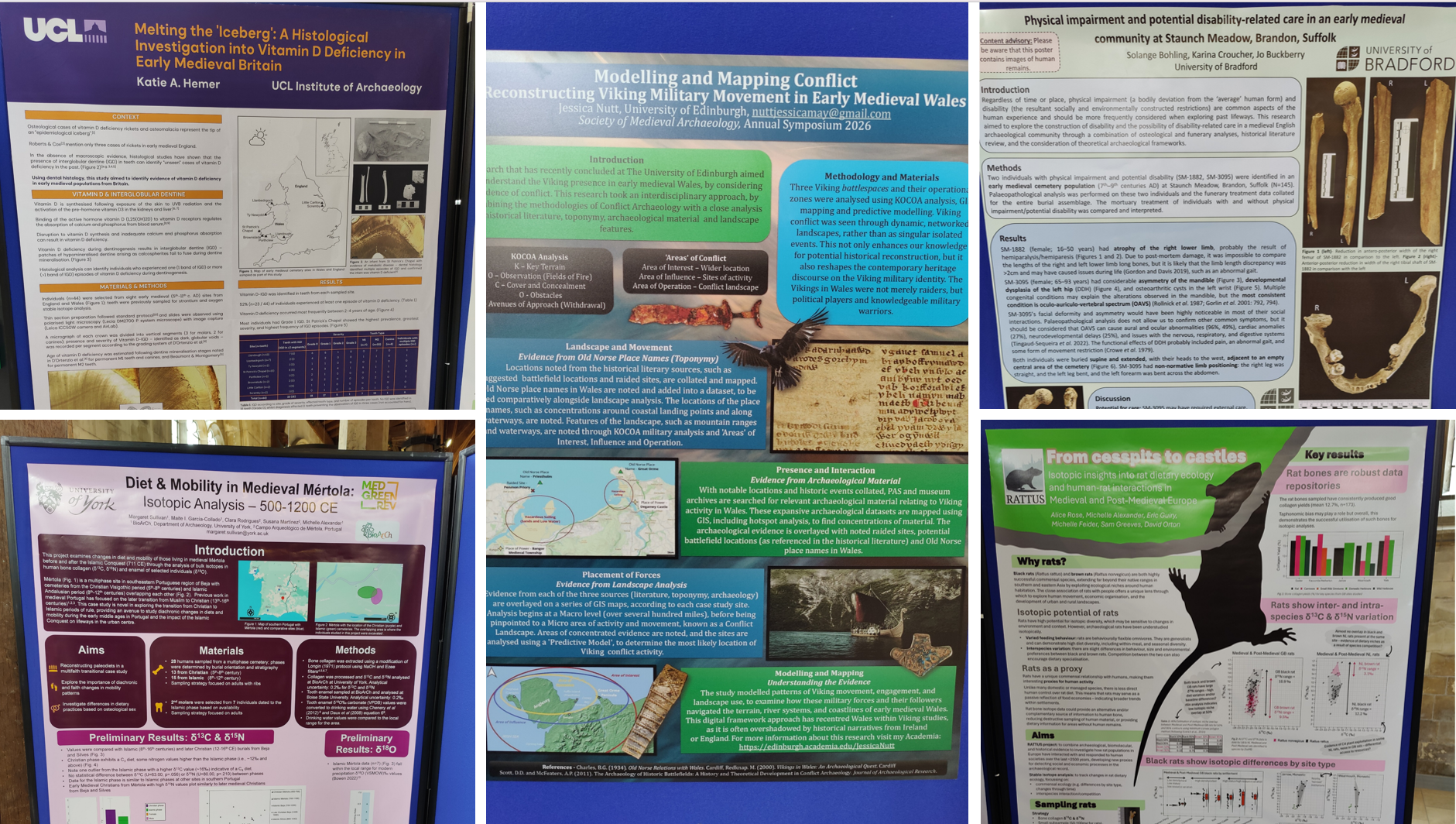
Research posters on display demonstrating the wide range of topics under the heritage science umbrella.
The final talk of the morning looked at analysis of timber and metalwork from Salisbury Cathedral. Kutsi Akcicek (University of Oxford) presented the results of his dendrochronological and archaemetallurgical research projects. The former has refined the construction histories of the cathedral spire and the Old Deanery, whilst the latter provided a better understanding of the performance and conservation challenges associated with historic ironwork. The cathedral will surely be glad that the ironwork in question was removed during previous works…!
After a tasty lunch it was time for Session Three and our final four talks, centred around bioarchaeology and the environment. First, Samantha Jones (Uniersity of Aberdeen) presented recent palaeoenvironmental findings from the islands of Iona and Tiree in the Inner Hebrides. By integrating these with archaeological and historical archives, the team were able to shed light on the lives of the lesser-known communities of these famous islands.
Sam Leggett (University of Edinburgh) then demonstrated the potential of high-coverage, high-resolution radiocarbon, palaeoprotomeic, isotopic and genetic analysis to change our understanding of social history in two key transition periods: the post-Roman-Early Medieval period and the Norman Conquest. However, the potential of these combined datasets is tempered by the fact that they are not always well-aligned – differing research questions behind the application of each technique, for example. So a key question is how to ensure more effective sampling strategies.
Next, Michelle Alexander (University of York) introduced new results from a project to investigate dietary practices in medieval Spain using biomolecular approaches such as isotope analysis and organic residue analysis. The combination of techniques, revealed that diet in medieval Spain was not determined solely by religious affiliation but rather by socioeconomic status and urban-rural differences, as well as political and environmental pressures.
Finally, Lucy Koster (Vrije Universiteit Brussels) spoke about isotope analysis on skeletons from two sites in medieval Flanders. Results matched social changes documented in historical sources, furthering our understanding of the impact of urbanisation on childhood in the Low Countries.
A final quick break before the keynote address provided the opportunity for Society President Sarah Semple (University of Durham) to award our annual prizes for the best Undergraduate and Postgraduate Dissertations. Full details of these will be in a separate post but for now we extend our congratulations to both our winners: Jonathan Baker (Undergraduate Prize) and Ellie Comerford (Postgraduate Prize).
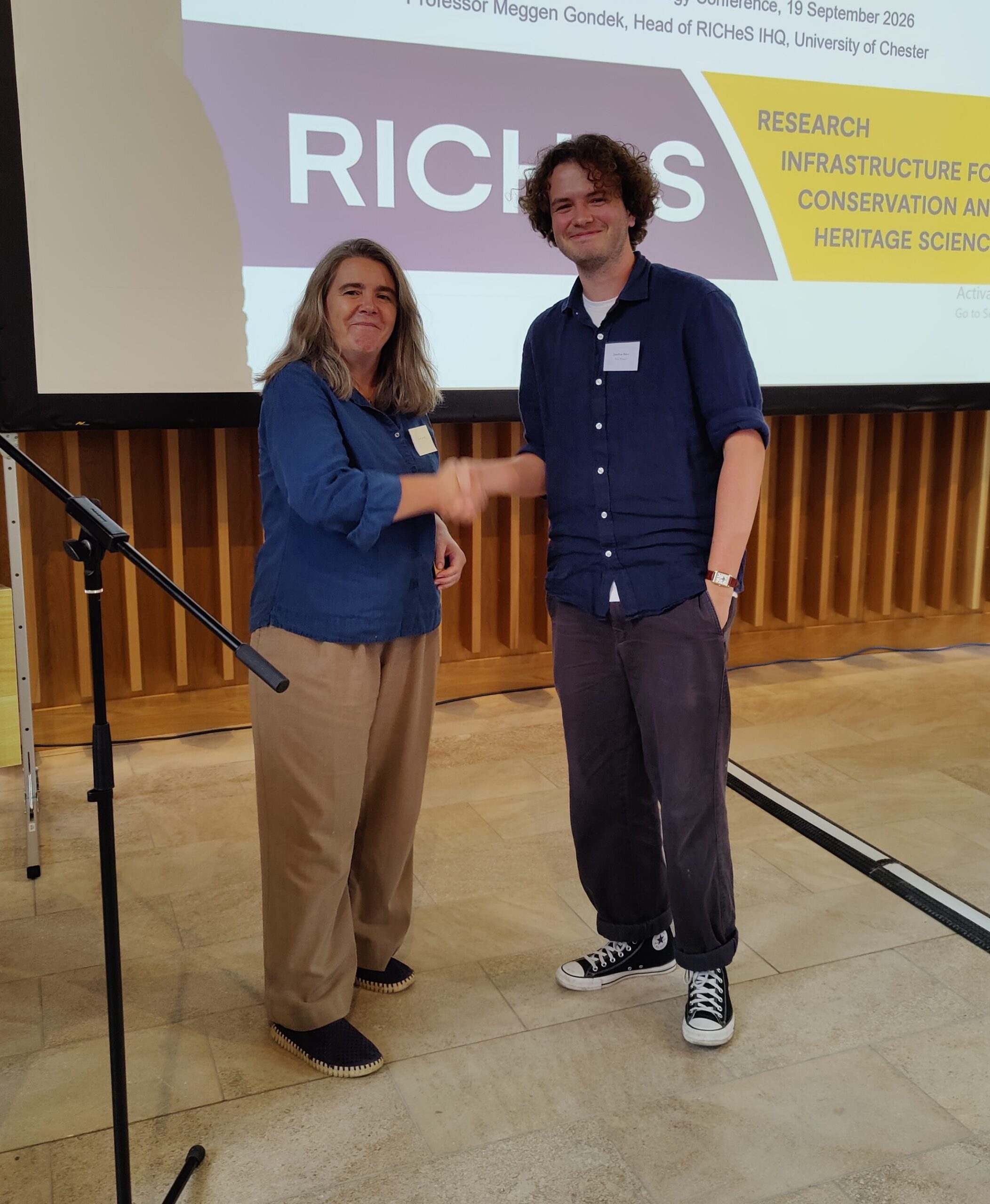
Prof Sarah Semple, Honorary President of the SMA, congratulates Undergraduate Dissertation prize winner Jonathan Baker.
Finally it was time for Meggen Gondek to take the stage as our keynote speaker. Meggen is the Head of International Headquarters for the RICHeS programme, a UK initiative aimed at enhancing the infrastructure for heritage science research. It connects specialist facilities, collections, and equipment across the UK, facilitating access for researchers and heritage organisations. It also includes funding for projects that strengthen conservation and heritage science capabilities, with a total investment of £80 million from the UKRI Infrastructure Fund, aiming to overcome the cost barrier that often prevents this kind of research. As well as telling us all about RICHeS, Meggen had us pondering what we mean by ‘heritage science’ and how we can get people excited about it. Is it a niche area or is it in fact a broad church with the potential to unlock understanding across a wide range of disciplines? The breadth and depth of research on display at the conference rather suggests the latter and the future direction of medieval archaeology seems very promising.
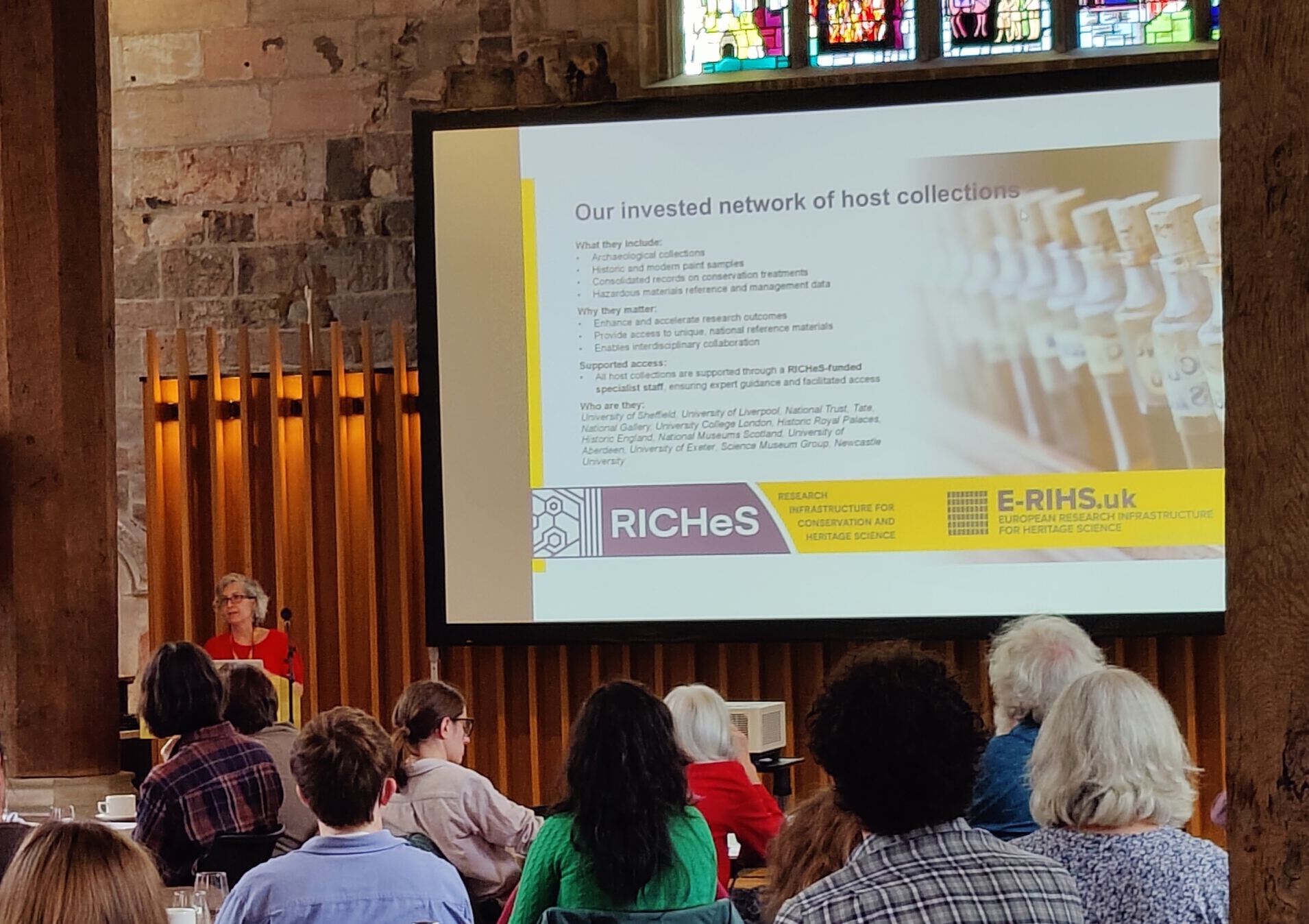
Meggen Gondek delivering her keynote.
Thank you once again to all of our fantastic speakers for their insightful and engaging talks. Thanks also to our hosts: the Centre for Medieval Studies and the University of York. And thanks to the staff at the Guildhall for the excellent venue and refreshments.
Latest News
The 2026 Annual General Meeting and Winter Symposium
We are delighted to announce that this year the Society will trial a hybrid Annual General Meeting and Winter Symposium. For some years these events have taken place online only, however, we have decided to hold a combined in-person and online event this year to increase the opportunities for members to meet and network. The
SMA Student Colloquium – Registration Now Open!
We are pleased to announce that registration for the 2026 SMA Student Colloquium is now open! This year the Colloquium is being hosted by the Department of Archaeology at the University of Durham and will take place on the 14th and 15th of November. There will be a programme of talks on the Saturday and