SMA Annual Conference 2025 Round-up
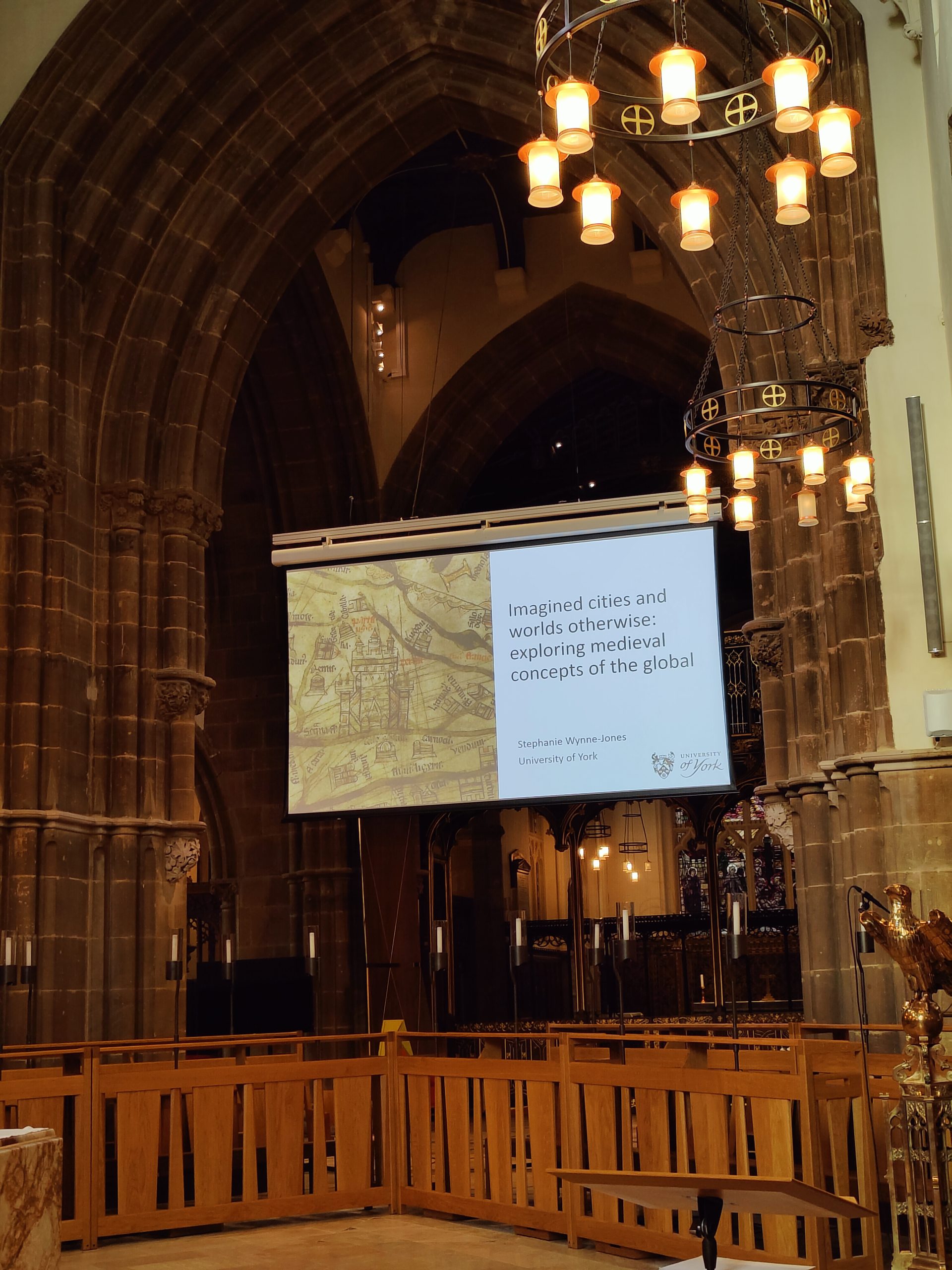
Stephanie’s keynote in Leicester Cathedral.
The Society for Medieval Archaeology recently held its 2025 annual conference in the vibrant city of Leicester. Delegates enjoyed a bumper weekend of talks beginning in Leicester Cathedral with an inspiring keynote from Stephanie Wynn-Jones (York University) who invited us to explore the Swahili medieval towns of coastal Africa through the lens of Italo Calvino’s “Invisible Cities”. We modern-day Kublai Khans listened as Stephanie wove wonderful narratives about the lives of medieval Africans from the fascinating archaeological remains at Kilwa Kisiwani and Songo Mnara.
On Saturday, the action moved to the Attenborough Arts Centre on the university campus. The first session delved the theme of “urban origins” and we had three excellent papers exploring how towns emerged and developed, and the socio-economic and political factors affecting this. Brendan Fahy used the case study of Ipswich to argue against the notion of a “founding moment”, instead suggesting a much more gradual and fluctuating process that requires a new theoretical framework that allows for such fluidity of development. A new materialism approach could be the way forward. Next, Victoria Ziegler presented a tour de force of statistical analysis that is shedding new light on medieval Lundenburgh. Through a combination of quantitative and qualitative methods, she showed how detailed analysis of a specific activity can be built upon to start talking about wider questions. Finally, Ivo Stefan showcased the impact of socio-political and economic factors on the development of medieval Slavic towns, as demonstrated by the abandonment of fortified towns in favour of new institutional towns.
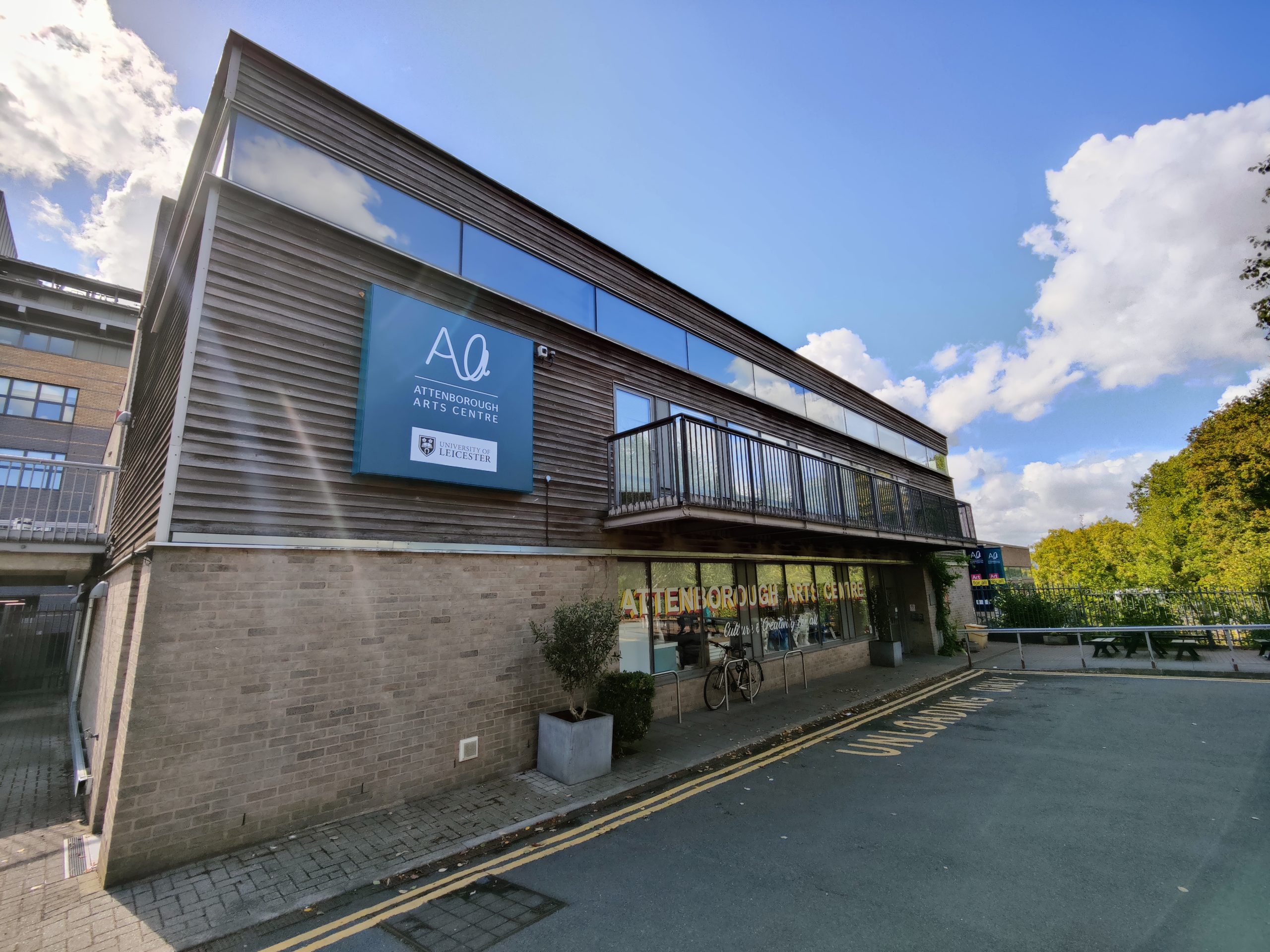
The Attenborough Arts Centre.
For session two, the focus shifted to “urban communities” and we had five fascinating papers investigating the people that lived in medieval towns. Rachèl Spros used isotope analysis to show how one parish in medieval Ypres fared through famine and pestilence, provoking wider questions about the disparities in wealth in medieval towns. Next, John Lawson showed how science is being used to pull out individual stories in medieval Edinburgh. Radiocarbon dating, isotope analysis and DNA analysis are teasing out new details from past excavations, enabling us to meet the past inhabitants of the city like never before. Blair Nolan then took us to medieval Lund to consider different experiences of local and non-local communities. Pairing survival analysis with isotope analysis has corroborated existing conclusions about the make-up of communities at different times in the medieval period, as well as providing new insights into how the different communities fared. Next Rebecca Boyd asked us to rethink the urban household, moving away from the notion of the traditional nuclear family to something more vibrant and fluid. She stressed the need to go back and reinterrogate excavated material with new intersectional perspectives. Finally, Craig Cessford introduced us to the ecclesiastical communities of medieval Cambridge, highlighting a disparity not just in the lives of the men and women themselves, but also in the study of male and female institutions. Presently, we can say far more about the male communities and their various identities.
The final session of the day focused on the study of urban neighbourhoods, with four more inspiring papers showcasing a range of approaches to the study of towns. Luisa Radohs introduced her project which uses individual plots as the basis for studying differences between urban dwellings. By creating a set criteria for the detailed examination of urban plots, she hopes to make a comparative study that will enable broader discussions about life in medieval towns. Abby Antrobus then talked through the discoveries made during developer-led excavations in the Redcliff Quarter of Bristol, with a particular focus on how lipid analysis of ceramic finds has helped build a picture of the culinary habits of this medieval suburb. We then moved to medieval Ypres once more, as Lennert Lapeere discussed his work integrating archaeological, historical and cartographic data to reconstruct the city’s late medieval suburbs, where only a third of the sites have been excavated. We finished the session off somewhat appropriately with Matthew Morris and Alice Forward’s paper about medieval Leicester. Their work on the settlement beyond the North Gate is challenging existing narratives about the specialised industrial nature of the settlement, suggesting that initial occupation was much more domestic and fairly high status.
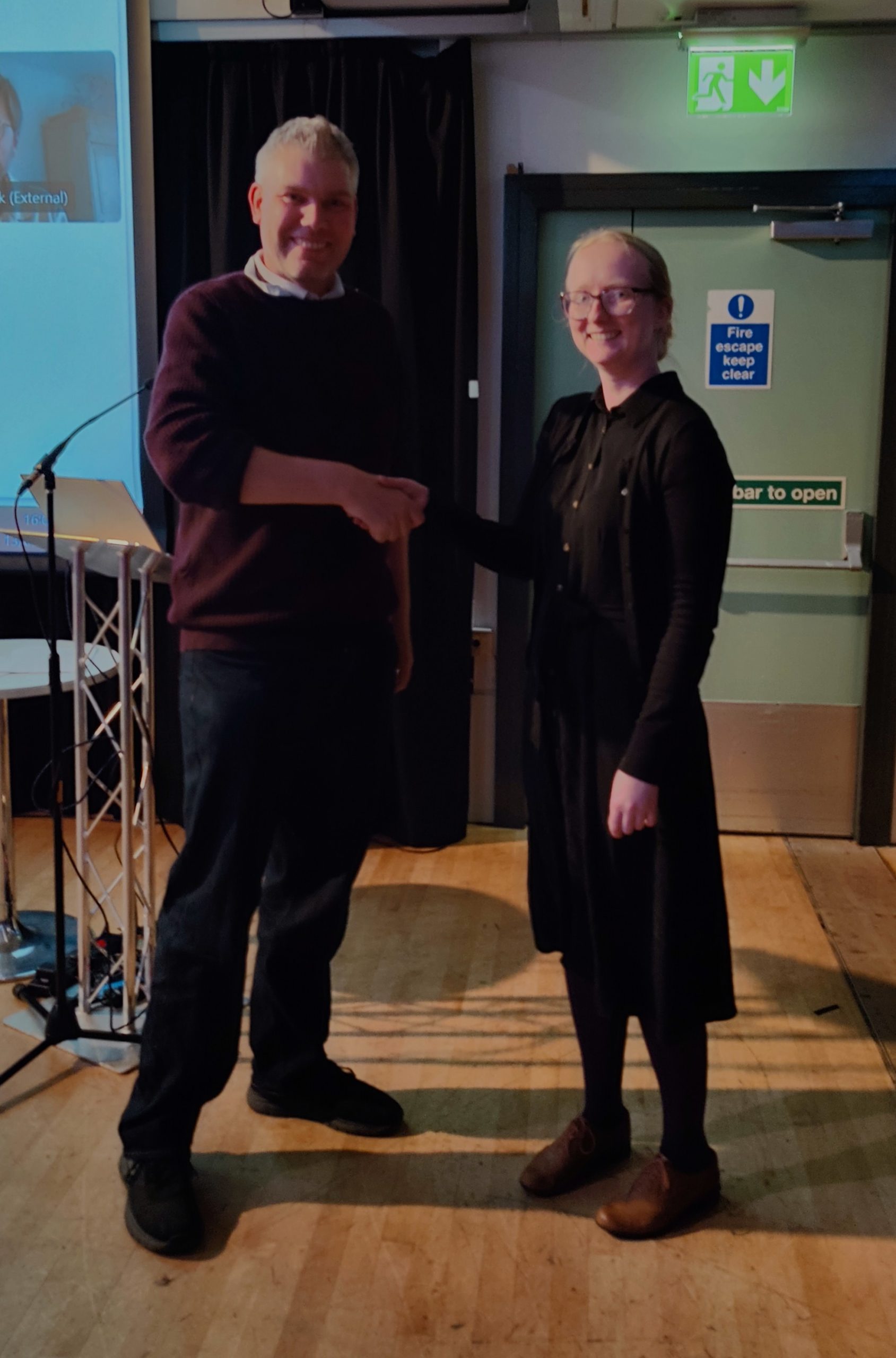
Awarding the Postgraduate Dissertation Prize.
The day was rounded off by the presentation of the Postgraduate Dissertation Award to Isobel Harvey (University of York) for her paper “Rooted in Red: An experimental comparison of two early-medieval botanical dyes”. It was a pleasure to be able to make the presentation at our conference and to demonstrate the strength of research coming through our early-career members. We were then treated to a second keynote, this time from Søren Sindbæk (Aarhus University), who gave a thought-provoking overview of work from ten years of UrbNet, demonstrating how far urban archaeology has come in a relatively short space of time. A welcome reminder of the importance of taking time to pause and reflect on our work.
Day Two kicked off with a session on urban environments and we had four excellent papers considering medieval towns in their wider environment. Kate Evetts started the ball rolling with an examination of an often overlooked but important element of medieval homes: the garden. We then had two papers focused on zooarchaeology. First, Gwen Maurer demonstrated how isotopic study of sheep, pig and cattle remains can reveal the economic practices and landscape use underpinning English medieval small towns. Then George Ellison put forward a model for investigating Viking-Age settlements using micromammal data. Finally, Paweł Cembrzyński advocated for applying urban ecology as part of a holistic approach to understanding the medieval mining towns of Central Europe.
The next session, “urban networks”, explored the connections within and between medieval towns. Ben Jervis approached the varying fortunes of urban towns through the lens of networks and connectivity, applying techniques used for the study of contemporary towns and combining this with the analysis of ceramic exchange networks to help explain regional variability. Wim De Clercq then transported us to the medieval maritime metropolis of Bruges to discuss how a new landscape-archaeological methodology has enabled the detailed reconstruction of Bruges and its network of outports, how it functioned and its socio-economic organisation.
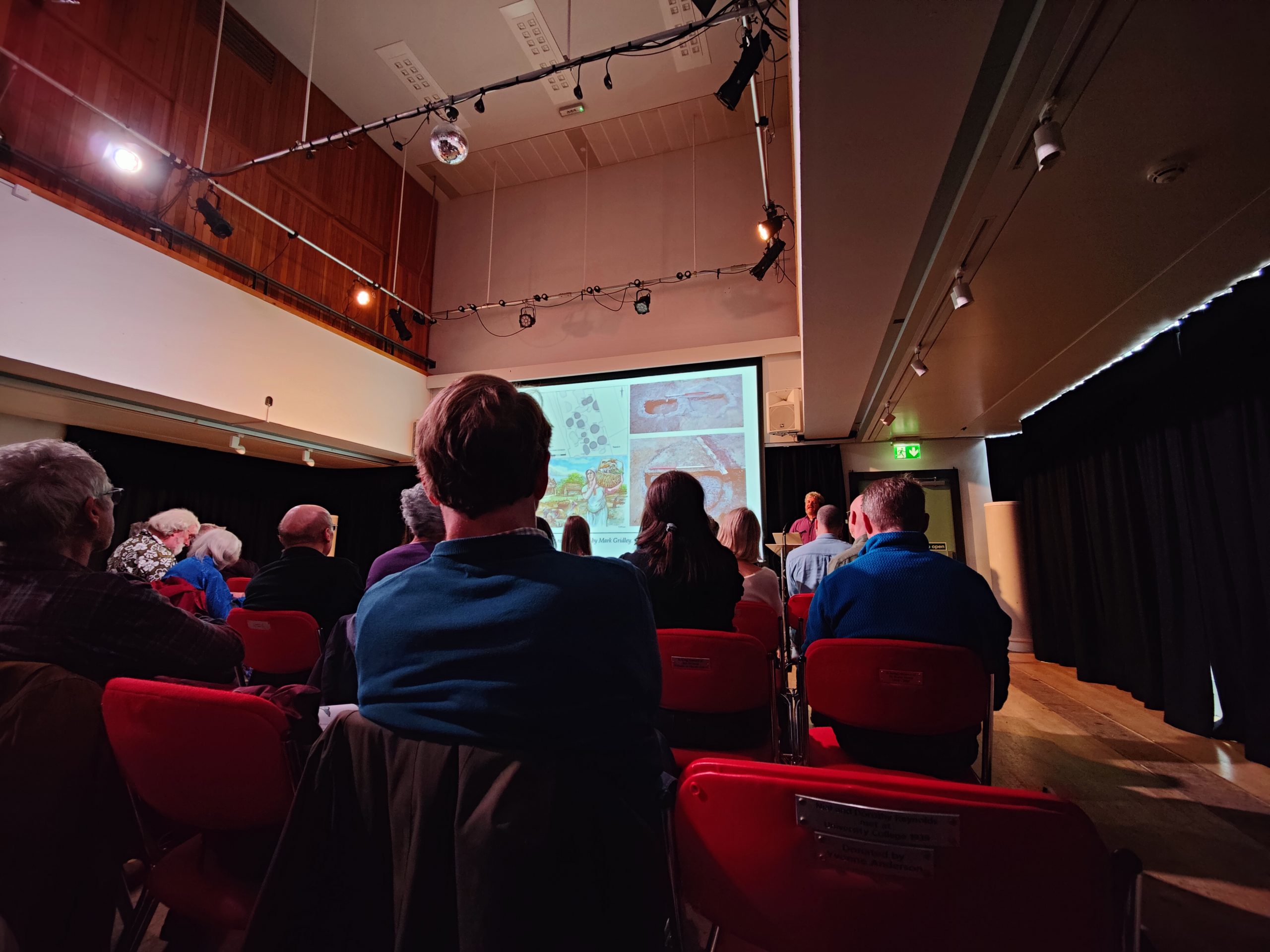
Listening to another excellent paper!
After a spot of lunch, it was time for the final session: Understanding Urban Spaces. The five papers presented methodologies for investigating and making sense of medieval urban spaces, with a focus on reassessing existing research through the lens of new techniques. Nigel Baker showed the value of reviewing previous historical research alongside grey-literature. His work on urban growth and contraction in medieval Shropshire has shown that the archaeology both supports the historical record and is helping to pin down the precise chronologies. Caroline Bourne then asked us to consider conquest through urbanisation in 12th century Wales, focusing on the early development of Swansea in relation to the wider region. Colonisation through urbanisation was not replicated to the same degree elsewhere in Gower and Caroline argues this is due, in part, to the presence of an existing Scandinavian trading settlement at Swansea. From medieval Swansea we leapt across the globe to East Africa as Monika Baumanova introduced us to the fossilised coral architecture of the Swahili urban landscape, discussing the characteristic features of these houses and applying sensory archaeology approaches to provide new insights into life inside. Arthur Redmonds then proposed a new theoretical approach to castle studies framed within the concept of “taskscapes” – exploring the castle through its interaction with the rhythms and tasks surrounding it. There were parallels here with Ivo’s paper and the shift in importance from fortified strongholds to urban environments centred on economic activities. Finally, Kirstine Haase spoke of the sheer volume of Danish archaeological data that remains largely untapped and how the application of deposit models and voxel-modelling can make this data more accessible to both professionals and the general public.
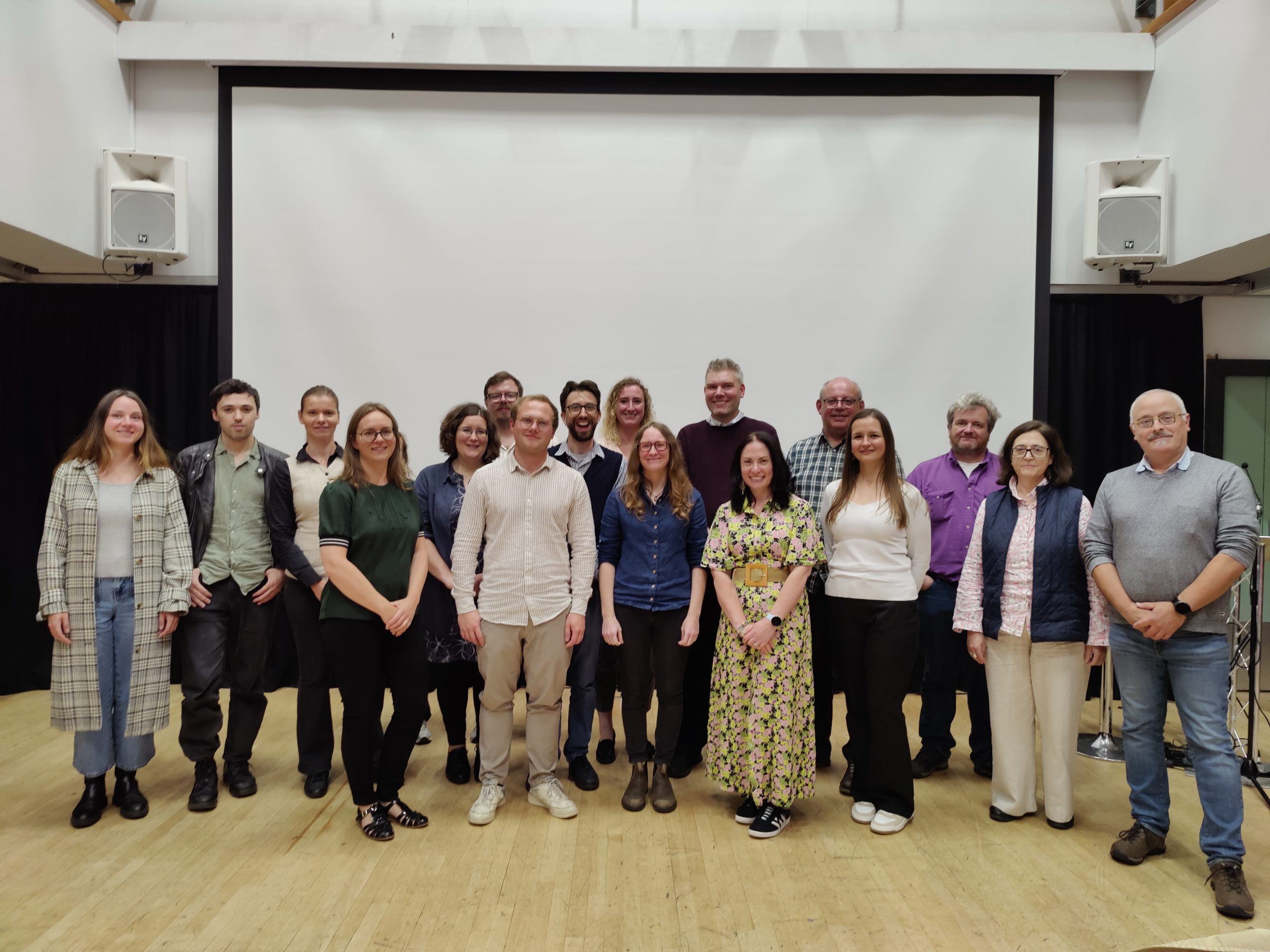
Some of our fantastic speakers from the weekend.
In summary, the conference provided a fantastic opportunity to reflect on the current status and strength of medieval urban archaeology. The range and diversity of the papers was impressive, from detailed scientific analysis of specific activities to broader themes on a macro scale. It was a fascinating and thought-provoking weekend and we look forward to following the continued research of all of our speakers after these tantalising introductions to their work.
Latest News
The 2026 Annual General Meeting and Winter Symposium
We are delighted to announce that this year the Society will trial a hybrid Annual General Meeting and Winter Symposium. For some years these events have taken place online only, however, we have decided to hold a combined in-person and online event this year to increase the opportunities for members to meet and network. The
SMA Student Colloquium – Registration Now Open!
We are pleased to announce that registration for the 2026 SMA Student Colloquium is now open! This year the Colloquium is being hosted by the Department of Archaeology at the University of Durham and will take place on the 14th and 15th of November. There will be a programme of talks on the Saturday and